Part 1 of 3: South America (Colombia, Chile, Argentina and Uruguay)
Do you ever feel like winter and the Middle East conflict are competing to see who can drag on the longest? If you’re longing for something to yank you out of the glumness and splash some colour across your eyeline, we’ve got an update that will have you googling flights faster than a peace deal can be brokered.
Say hello to a selection of our hottest destinations for 2027!
We don’t necessarily mean temperature hot, although you’ll still want to pack a swimsuit.
We’ve spotted a trend, and our fingers (and ears) are burning: enquiries for our South America, Africa and Asia adventures have been going off like rockets lately.
Why?
Because they’re a long way from the rockets going off elsewhere.
And the best thing is, there are plenty of flight options that don’t transit via Dubai or Doha. Smart move!
With so much to share, we’re breaking this down into a three-part series. To kick things off, Part 1 takes a closer look at South America.
COLOMBIA: Coffee, Culture and Hummingbirds
Fancy a cup of Colombian medium roast?
It’s how our teammate, Jacqueline (Jax), over at our sister company Carex(opens in a new tab), starts each day, since she lives in Colombia’s capital, Bogotá.
Colombia is also one of the world’s great coffee-growing countries. Take it directly from Jax, who spills the coffee beans for us.
“Once you’ve tried Colombian coffee straight from the source, there’s no going back! The coffee from the hills of Colombia is so soft, buttery and sweet. I haven’t tasted better anywhere else in the world.”
You simply can’t go to Colombia without visiting a family-owned coffee farm. Often a cacao and chocolate tasting goes side-by-side with a coffee tasting, a perfect blend of impressions for all the senses. But hold up, not before you’ve ‘stretched the hammies’ of your tastebuds with a tropical fruit tasting of the Paloquemao Market.
Here’s what Jax had to share…
“One of the things that astounded me when I first arrived was the huge variety of fruits available here. I tried 15 completely new ones and fell in love with guanabana (soursop), lulo, granadilla, maracuyá and curuba, which is best tried as a juicy, milky drink. It sounds a little weird, but it’s delish!”
Mm-mmm, nature’s nectar!
Speaking of nectar, you’re not the only one after the sweet stuff out there.
Close those peepers for even a split second and you’ll miss the delightful little thieves that steal a sip from the 5,000 orchids on La Ceja’s eco-trails.
We’re talking about hummingbirds.
What they lack in size, they sure do make up for in speed.
60 to 90 wingbeats… per second!(opens in a new tab)
So any trip to the region might require you to press pause on blinking for the day.
“Colombia is the hummingbird capital of the world,” shares Jax.
“The variety is insane. They come in so many different colours, they just seem unreal, so to see them in their natural habitat amongst the delicate orchids is fascinating.”
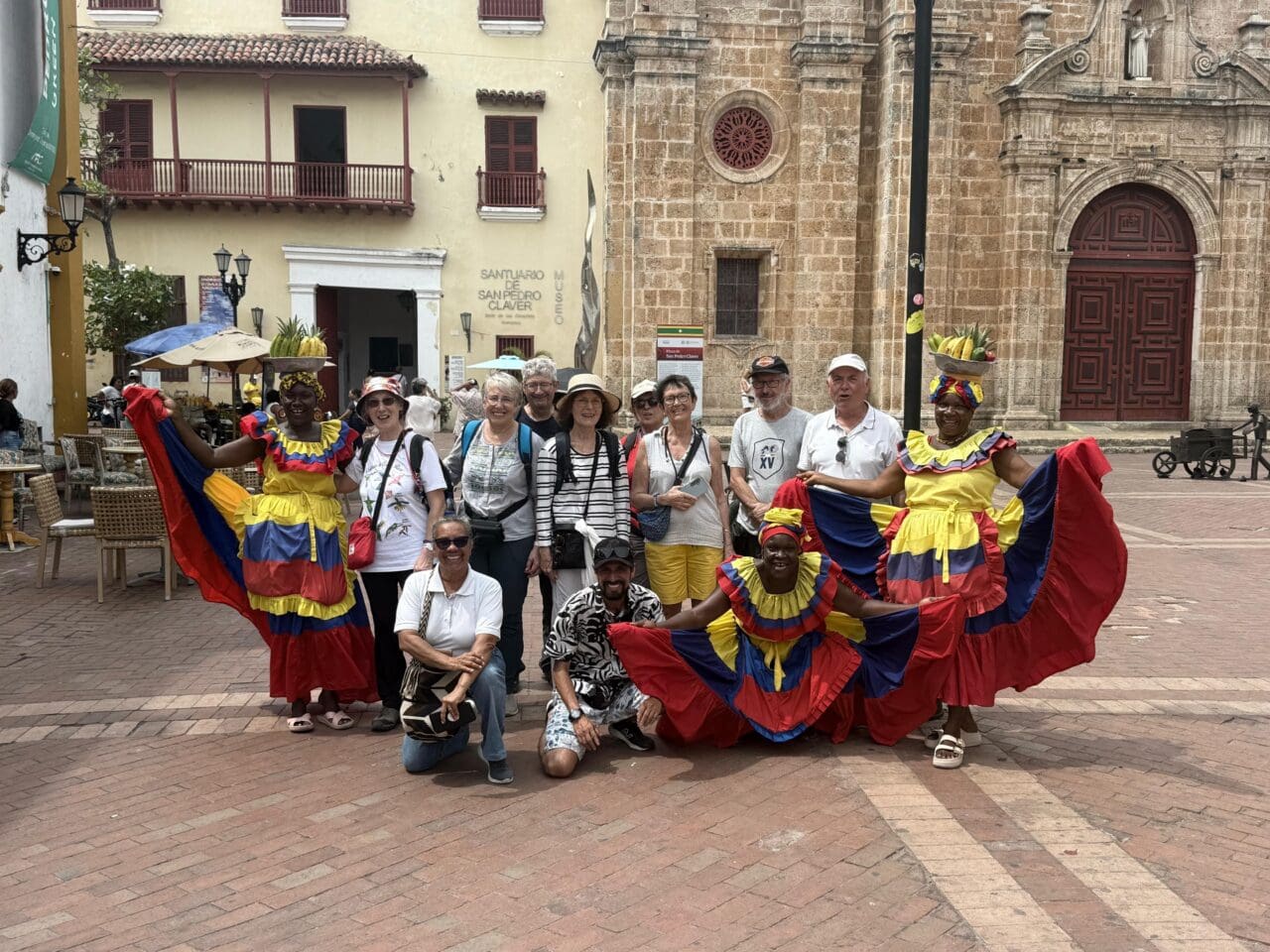
Want to know what else is fascinating?
The city of Medellín.
If that name rings a bell, it might be for all the wrong reasons. But that’s all in the past now, because the ‘City of Eternal Spring’ has come a long way since the ‘90s Cartel War raged through its tightly packed streets (and made it the most dangerous city in the world).
Medellín’s turnaround into a modern, safe and happy place to live is legendary. A real culture-craving traveller can dive deep into this evolution by volunteering in Comuna 3, Manrique. Let’s just say it’s a way to experience a perfectly legal high – the addictive energy of the local community spirit.
And that’s before you get to the large-scale street-art murals and the smiley, friendly Paisas who are excited to show you their neighbourhood. If you’re lucky, one of them may teach you to salsa!
Giggling much? We don’t blame you.
If you want to give your facial muscles a real workout (and your quads too), swap that grin for a look of rock-hard determination at the base of nearby El Peñol. Look up, and you’ll see a staircase of 708 stone steps(opens in a new tab), wedged into the side of this 70-million-year-old monolith. Now that’s a challenge for the really adventurous!
So we think you’ll agree: from sipping coffee at the source to scaling El Peñol’s 708 steps for panoramic lagoon views, Colombia really is pure magic(opens in a new tab).
CHILE
If Colombia’s city-as-canvas street art and hummingbird-filled skies aren’t enough to coax you out of your end-of-winter drab, we may still have the perfect antidote for you…
How does blazing a trail of colour across Chile and Patagonia sound? Sunnies on, painter’s palette out, let’s see what Chile has to offer!
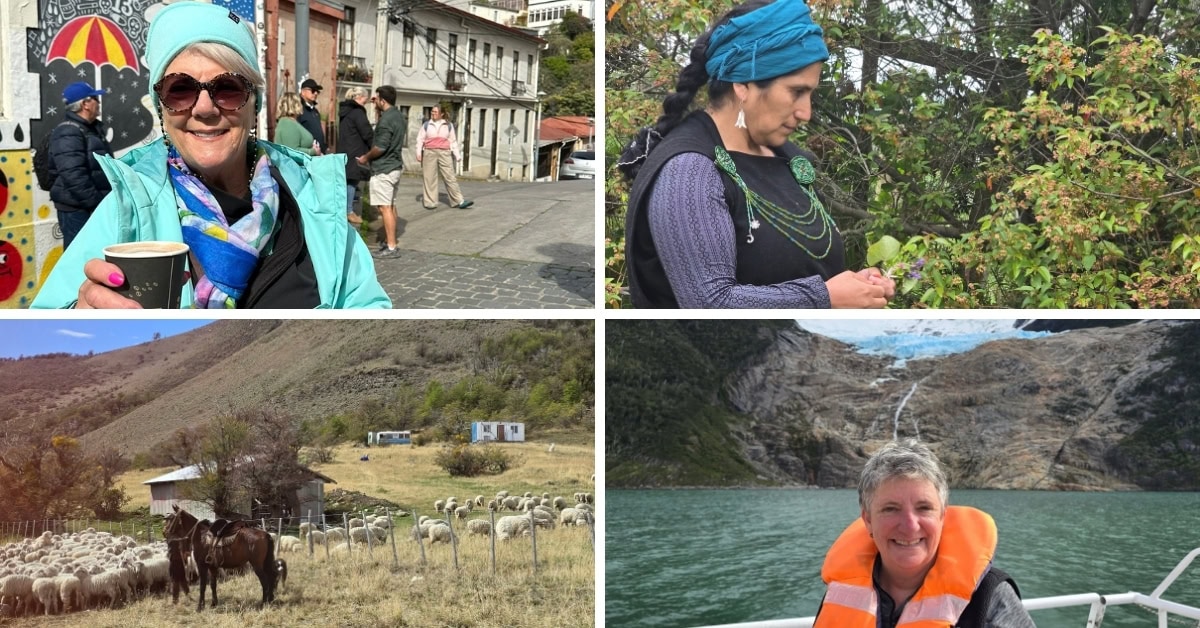
The kinds of colours we’re talking about are:
- Rich ochre reds of the Atacama Desert, one of the oldest and driest on Earth, where the flamingos(opens in a new tab) of Laguna Chaxa are so pink, Barbie herself would chuck a jealous tanty
- Blue hues of the Altiplano’s high-altitude lagoons that melt into the sky
- Earthy browns and olive greens wrapped in puffs of white geothermal steam at the El Tatio Geysers in the Andes
- Icy turquoises of Patagonia’s glaciers, lakes and fjords that even a Disney Princess couldn’t conjure
They’re all yours for the taking!
If you’d rather bring a little colour into the world yourself, head to Santiago, where you can learn ancestral Mapuche ceramic techniques and create your own earthenware masterpiece under the guiding hands of a local female artist.
And don’t worry if you’ve never attempted this art form before.
You’re in safe hands.
With every push, roll and pinch of the clay, your confidence will grow, and so too will your knowledge of the indigenous Mapuche people who held fast against the Inca and Spanish empires for over 300 years!
That’s a double win!
Want to learn more about how people live around here? Set your sights far across the Patagonian steppe to spend time with the real-life ranch families of an estancia.
Not familiar with estancieros?
They give the term ‘remote working’ a whole new meaning.
Meeting with estancieros will teach you what it takes to thrive in one of the most extreme places on Earth, and the sense of community you’ll feel as you’re welcomed into their homes will make your community at home feel critically endangered.
Beyond the wildest colours and warmest people this side of the equator, Chile is the kind of place that won’t let go of you.
So if you’ve come all the way to Chile and can’t face zipping up your bags just yet, there’s something else to tempt you that you may not have considered.
Easter Island is only one flight and a handful of hours away!
That’s right, this small, windswept Pacific island has been keeping a secret for centuries. Rapa Nui’s nearly 1,000 moai statues(opens in a new tab) stand gazing across the ocean, and being among them feels less like a travel stop and more like standing at the edge of the world.
It’s one of the most isolated places on Earth, yet it’s surprisingly easy to reach from Santiago.
Desert colours, Patagonia glaciers, silent stone statues – you see why people are itching to go to Chile(opens in a new tab), right?
URUGUAY AND ARGENTINA
Now, if multiple cups of the world’s best Colombian coffee aren’t for you, might quaffing a glass or several (responsibly, of course) from some of South America’s finest winemakers tickle your taste buds?
Because Argentina and its sleeper-stunner neighbour Uruguay have loads of those!
Follow us down the rabbit hole…
You might allow yourself to lean back in one of the vineyards near the Cerro de los Siete Colores(opens in a new tab). The name gives away your backdrop, a hill of seven colours, but this is a glass of wine you’ll need all your senses to experience.
Looking for more of a family-run feel? Sidle up to a sommelier at Bracco Bosca’s winery and become a proper pro at swirling that most Uruguayan of wines, the made-for-meat Tannat red. Did we hear a “Yum!” (except in Spanish)?
But while we’re talking Argentina and Uruguay, they’re about more than their wines, of course. They grab your attention with late-night energy, unreal sunsets, and a tranquilo rhythm that sinks into your steps a little more each day.
In fact, when we asked our teammate Jodie about her home country, it was hard to get her to stop talking about Uruguay, the under-the-radar hotspot.
“Uruguay often gets overlooked as a travel destination, but it has so much culture to offer. The buildings are beautiful, the people are cheerful and warm, the atmosphere out and about is exciting and there are always markets and live music in the streets. Many people describe it like stepping back in time.”
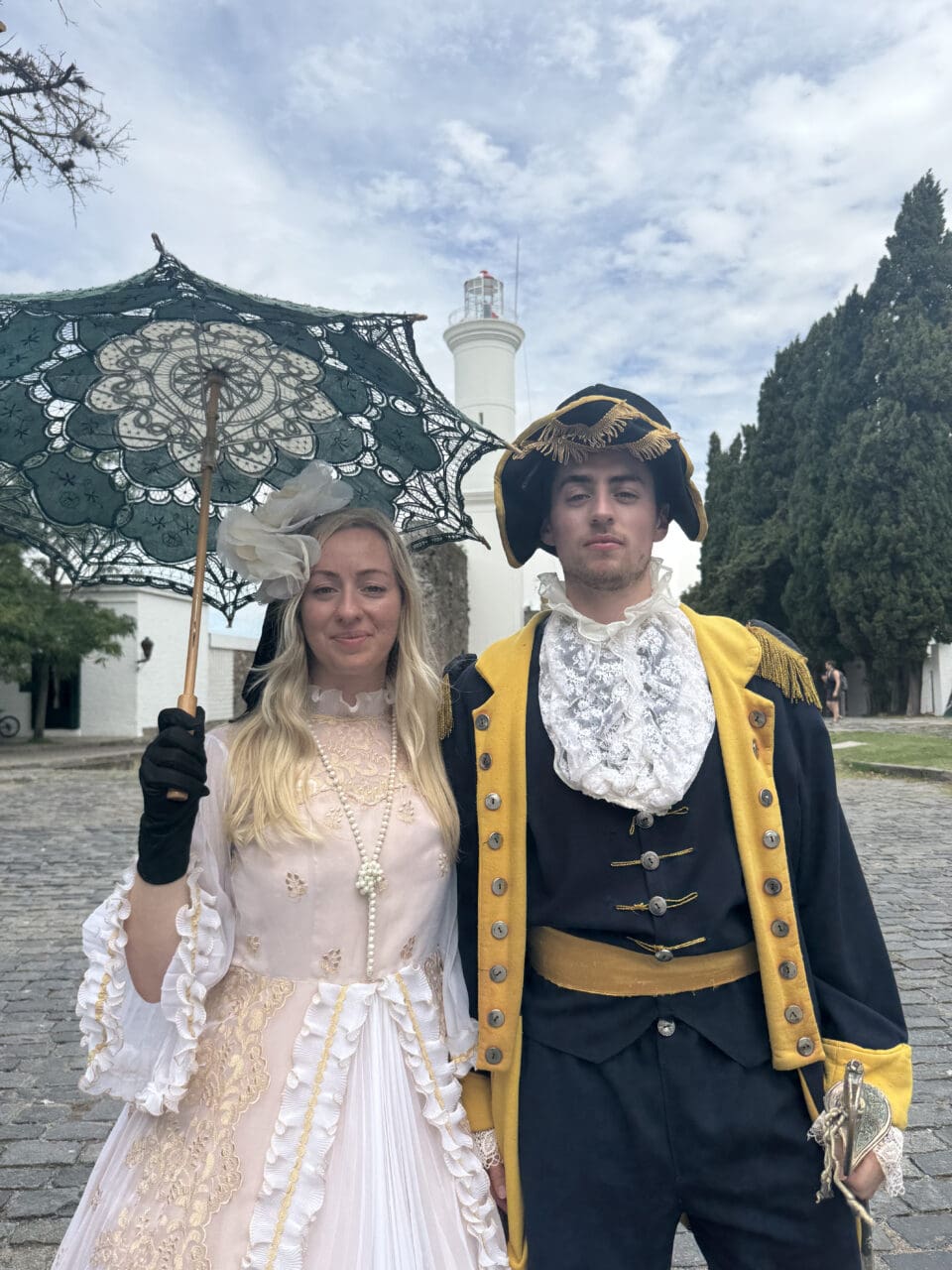
Curiosity officially piqued? Then head straight for her favourite must-visit spot, Colonia del Sacramento(opens in a new tab), where colourful architecture and cobblestoned streets lead you to a UNESCO-listed Historic Quarter. Sorry, we buried the lede: you get into the barrio by crossing an 18th-century wooden drawbridge and walking through a stone gate. Come on!
Jodie says:
“Bring your camera. It is so picturesque and great to explore. You’ll spot so many quirky little pieces of art, old buildings, cafes and lots of sleepy street dogs just chilling!”
Now, if you, like us, like to let your taste buds lead the way, these two countries have already set the table.
So any trip to these two countries requires arriving on an empty stomach and quickly figuring out how the locals eat, because sharing the food of a people is like an autobahn shortcut to understanding a country.
You’ll definitely want to make a reservation at an Argentinian steakhouse for some grade A asado. It’s non-negotiable. But don’t sleep on an open-air, wood-fired BBQ if you can find one – follow the smell of grilled meat through Buenos Aires and let your drooling tongue lead the way. Did you bring a bottle of Malbec (Tannat’s neighbour) for the table?
And, of course, there’s mate, a real friendship-boosting beverage that’s more experience than drink in this part of the world. Listen in as Jodie tells you how to drink it like a local.
“Mate is an infused herbal tea that is shared between friends. Insiders know it’s passed around the circle to the right, and in Uruguay it’s considered good manners to stick to that order. Walking around in Uruguay, you will see mate everywhere, like groups of friends sitting in the park drinking it.”
Feeling an urge – no, a need! – to be like those groups of friends? You could step up to the nearest group and see if they’ll let you squeeze in. Or you could round up a bunch of friends of your own (new or old) and arrange a private mate preparation ceremony, complete with a guide who knows how to serve it so you don’t have to think about it…
We’d love to tell you that’s all the highlights, just a quick bite and then you’ve done all there is to do. But of course there’s much more!
We haven’t even mentioned living with the gauchos in the foothills of the Andes, looking for 1,000-year-old tombs in the copper-coloured walls of the Humahuaca Gorge, or squinting at the shimmering white flats of the Salinas Grandes.
And that’s the thing about these two: as rich in tones and as layered as that seven-coloured hill behind you, Argentina and Uruguay are best explored together(opens in a new tab).
¡Salud!